For more information on CloudApper AI TimeClock visit our page here.
Across industries—from professional services and logistics to education, nonprofits, and field services—one hidden payroll killer stands out: overtime creep caused by inconsistent or overly generous rounding practices. Small, repeated upward rounds on clock-ins/outs add up fast, inflating labor budgets, triggering unexpected FLSA overtime, and straining cash flow without delivering proportional productivity.
The Rounding-Overtime Connection
Workday’s nearest 15-minute rounding (the default many organizations start with) creates a 7.5-minute window on either side of each quarter-hour mark. While neutral in theory, real-world patterns often skew:
- Employees arrive 5–7 minutes early → round up to the next quarter-hour → extra paid time.
- Late clock-outs after shift end → round up again → compounded premium pay.
Over weeks, this can quietly add 1–3% to total payroll costs—especially painful in organizations with large hourly populations or tight margins.
Why This Pain Is Industry-Neutral
- Professional services (consultants, auditors): Billable hours get distorted.
- Logistics & transportation: Drivers and warehouse teams rack up unplanned OT.
- Education & nonprofits: Budgets are fixed; extra OT eats into program funding.
- Field services (HVAC, plumbing, maintenance): Technicians’ “quick wrap-up” minutes multiply across dozens of daily jobs.
FLSA requires rounding to be neutral over time, yet many setups unintentionally favor employees because shift-start discipline is stronger than shift-end discipline.
Effective Rounding Strategies to Curb Overtime Creep
- Shift-specific rules in Workday: Apply stricter rounding (nearest minute or down-round bias within legal limits) on clock-outs while keeping standard 15-minute on clock-ins.
- Grace period + auto-deduction combo: Allow a short unpaid grace (e.g., 7 minutes) before rounding begins—common in many compliant setups.
- Analytics monitoring: Use Workday reports to flag departments/teams where average rounded time exceeds actual worked time by >2%.
- Policy transparency: Clearly communicate the rounding window so employees self-regulate behavior.
These tweaks often recover thousands in annual payroll without morale hits—when paired with fair enforcement.
Make It Effortless with CloudApper AI Time Clock for Workday
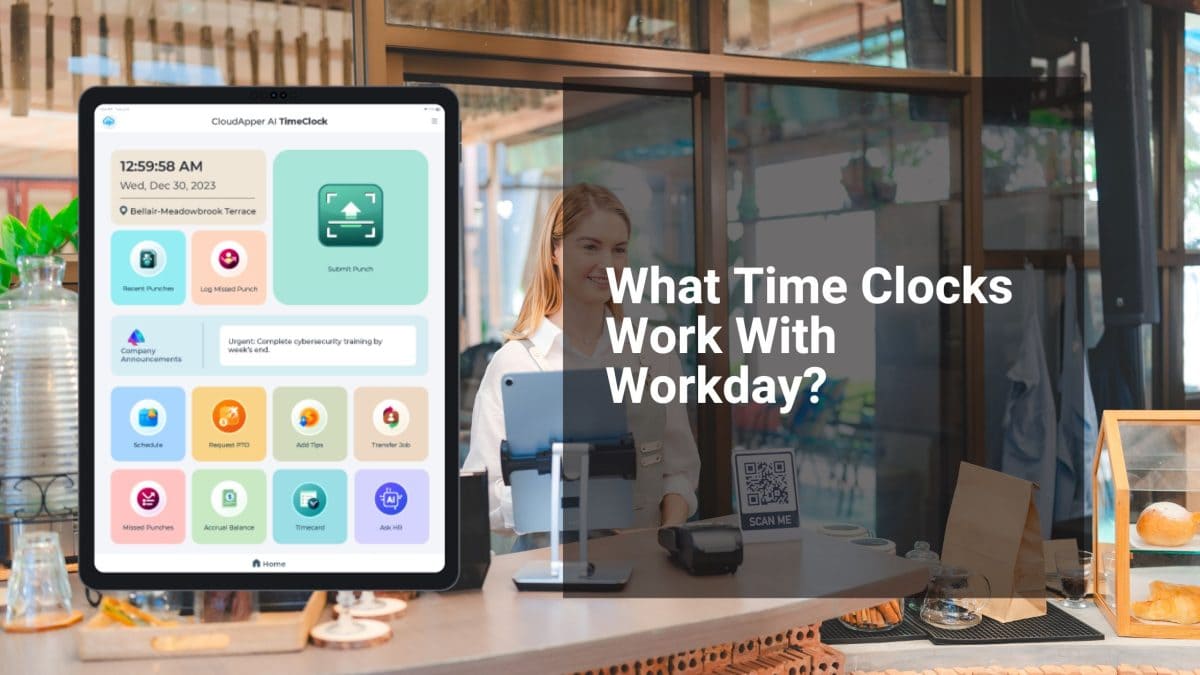
Native Workday rounding gives flexibility, but controlling creep requires visibility and customization at scale. CloudApper AI Time Clock adds powerful layers: AI-driven policy recommendations, real-time rounding impact dashboards, touchless Face ID + geofencing to lock punches to actual arrival/departure, offline mode, and per-shift/per-role rounding—all syncing natively to Workday Payroll. At just 25% of traditional kiosk costs, it turns overtime management from reactive to proactive.
For the full spectrum of Workday rounding configurations, see the original guide: A Guide to Workday Time Clock Rounding Configurations.
Ready to stop overtime creep in its tracks? Visit CloudApper AI Time Clock for Workday and take precise, compliant control of your time data today.
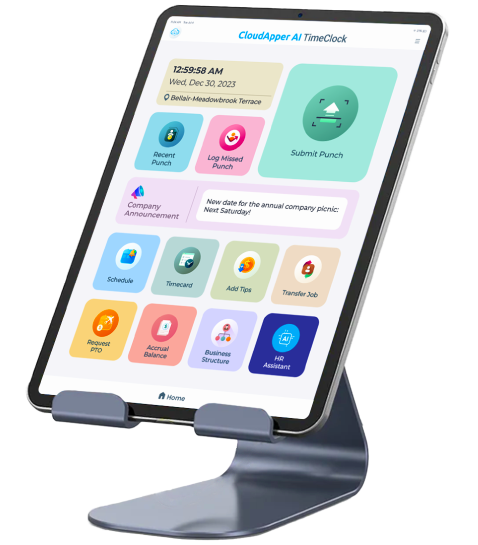
Super Efficient Employee Time Clock Kiosk Application
Cost Effective Employee Time Clock Application for
All Major HR, HCM
and Payroll
Systems